Commercial Waste Removal in Teddington

Commercial waste removal in Teddington should be straightforward, discreet and organised around the way your business actually works. We handle regular and one-off collections for workplaces that need a reliable route for mixed business waste, with services shaped around the type of materials, the volume involved and the access at the premises. From routine clearances to larger changes in stock, fittings or equipment, the aim is to keep the process efficient and easy to arrange.
Our service is built for business premises that need practical waste control, including offices, retail units, hospitality spaces and other commercial sites. We can help with general rubbish, furniture, office contents and some specialist categories where appropriate, always keeping the collection method suitable to the load. If you are comparing options, start with the specific waste type and the most convenient timing for your team. You can also request a quotation once you know what needs taking away.
For businesses that want a clear starting point, the most useful approach is to describe the items, the access route and whether the waste is already bagged, boxed or still in place. That gives a better basis for planning, especially where lifting, sorting or careful removal is involved. If you want to talk it through first, simply get in touch and we can help you decide what is the best fit for the job.
Commercial Collections for Everyday Business Waste
We deal with everyday commercial waste that accumulates through trading, refurbishment, reorganisation and tenant changes. That may include bagged rubbish, packaging, broken items, redundant files, display materials and other non-hazardous waste that no longer needs to stay on site. A well-organised collection helps keep storage areas usable and makes it easier to free up space without disrupting the rest of the business.
Where waste has been building up over time, the collection can be planned as a single clear-out or handled in stages. The best option depends on how much needs removing and how it is stored. Some businesses need a simple load-up from a back entrance or loading bay, while others need waste moved through shared access or from upper floors. In every case, practical access information matters more than guesswork, because it helps the collection run smoothly.
Useful details for a quote usually include the type of waste, approximate quantity, floor level, and whether there are lifts, parking restrictions or timed access windows. If possible, it also helps to say whether items are loose or already gathered together. That sort of information keeps the arrangement clear and avoids unnecessary delays on the day. See pricing and quotes for more on how estimates are prepared.
Office Waste, Furniture and Clear-Out Support

Office waste removal often involves more than just bags of rubbish. Workplaces regularly need desks, chairs, filing cabinets, shelving, monitors, storage units and general contents removed in a way that respects the building and the people still using it. We can assist with office clear-outs that need careful handling, whether the aim is to refresh one room, empty a suite or remove items left behind after a move.
For mixed office clearances, it helps to separate the work into pieces. Furniture may need dismantling before removal, while paperwork, packaging and small electrical items may need sorting into different streams. We can also support confidential shredding where documents need secure handling rather than ordinary disposal. That is useful where privacy matters and the contents should not simply be put into general waste.
What Office Clients Commonly Need
Typical office jobs can include clearing a reception area, removing redundant storage, taking away broken seating or dealing with the contents of a room that is being reconfigured. In many cases, the most important decision is whether to remove everything in one visit or phase the work so staff can keep operating. When you are ready, you can ask for a quotation based on the items and access conditions.
Furniture Disposal for Business Premises
Business furniture disposal needs a careful balance of speed, handling and suitability. Not every item is simply rubbish; some pieces may be reusable, while others are damaged, bulky or awkward to move through narrow corridors and stairwells. We remove furniture from commercial settings such as offices, studios, shops and managed buildings, with an approach that focuses on safe lifting and practical loading.
If you are replacing a work area or clearing redundant stock, the process often starts with identifying which pieces are going and which need to remain. That matters because it affects the order of work and the time needed on site. Larger items such as tables, storage cabinets and seating may require extra care at doorways and corners, so it is sensible to mention anything especially heavy, fragile or fixed in place. You may wish to separate reusable items from disposal items before the collection if that helps your team.
Where furniture is mixed with general waste, it is usually more efficient to group the items by room or by type. This gives a cleaner clearance and makes it easier to match the right vehicle and manpower to the load. If you are arranging a business move, closure or refit, a furniture collection can often be coordinated with the rest of the waste removal work rather than handled as a separate task.
Specialist Items and Fridge or Appliance Removal

Some commercial waste requires more than a standard general rubbish collection. Fridges, freezers and other appliances can be heavy, awkward and difficult to manoeuvre, especially where they need to pass through shared access or narrow service areas. We provide appliance removal for eligible items that need to leave the premises safely and in an organised way, rather than being left in place because they are too cumbersome for routine disposal.
Commercial premises sometimes accumulate specialist waste alongside ordinary furniture and packaging. When that happens, it is useful to note whether the appliances are freestanding, built in or already disconnected, as well as whether any other items are being cleared at the same time. That helps decide whether the collection should be planned as a separate load or handled as part of a wider clearance. For businesses with several types of waste, a combined visit can be more convenient than booking different removals for each category. Fridge and appliance removal is the right place to look when appliances are the main part of the job.
Not every item is suitable for the same treatment, so the waste type matters. Where there is any doubt about handling, weight or category, it is better to identify the item clearly before the collection is arranged. That keeps the process accurate and avoids surprises when the team arrives. If you want to proceed, a plain description is usually enough to begin with: what the item is, where it is located and how many need removing.
Business Waste Plans and Ongoing Collections
Some premises need more than a one-off clearance. Regular business waste removal is often the better fit for sites that create waste every day, every week or at predictable intervals. That can include packaged waste, office rubbish, stored overflow, sweepings and other materials generated during normal trading. Ongoing collection arrangements are useful because they reduce build-up and help keep work areas easier to manage.
For recurring work, consistency matters. The collection method should match the way your site operates, including opening times, loading access and any restrictions on where waste can be left before collection. If you have different waste types, it is also worth keeping them separate at source so the right streams can be dealt with properly. In some cases the waste is mostly general; in others, a clearer plan is needed for furniture, appliances or secure paper disposal. Business waste removal gives a fuller picture of this kind of ongoing service.
Planning Around Your Premises
Businesses often find it helpful to think in terms of location within the building: front office, stockroom, back-of-house, plant space or storage corridor. A collection can then be planned around those areas so the work follows a logical route. If there are gate codes, loading slots, shared entrances or building rules, mention them early. That way the service can be arranged to fit the site instead of interrupting it.
Garden, Garage and Property Clearances for Commercial Sites
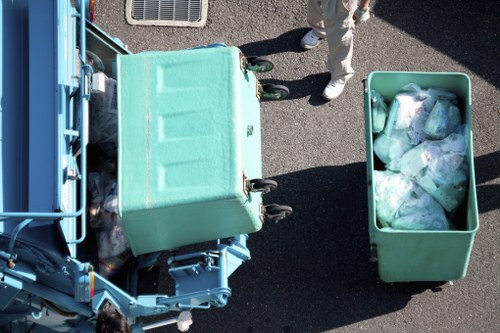
Commercial properties sometimes need more varied clearance work than a single waste category. Outdoor areas, yards, garages and storage spaces can collect broken equipment, discarded materials, old fixtures, packaging, soil-filled containers or mixed rubbish that has built up over time. We can support clearances where the job is to remove unwanted items from a business-managed site and leave the area ready for its next use.
Garden and garage waste often needs sorting because the contents may be mixed. For example, there may be old tools, broken planters, storage boxes, timber offcuts, bags of general rubbish or items that have simply been left unused. It is sensible to identify any heavy or awkward objects in advance so the collection can be planned properly. If the waste is spread across several areas, it may be easier to tackle the job as a structured clearance rather than trying to describe everything in one line. See garage clearance if that is the main focus, or garden clearance for outdoor materials and green waste.
Where a site has both inside and outside waste, the best order of work can make a noticeable difference. Removing the most accessible items first often creates room to reach the remaining load, especially if the clearance involves stored stock, old fittings or debris from maintenance work. A sensible plan keeps the operation practical and helps the premises return to normal more quickly.
About Teddington
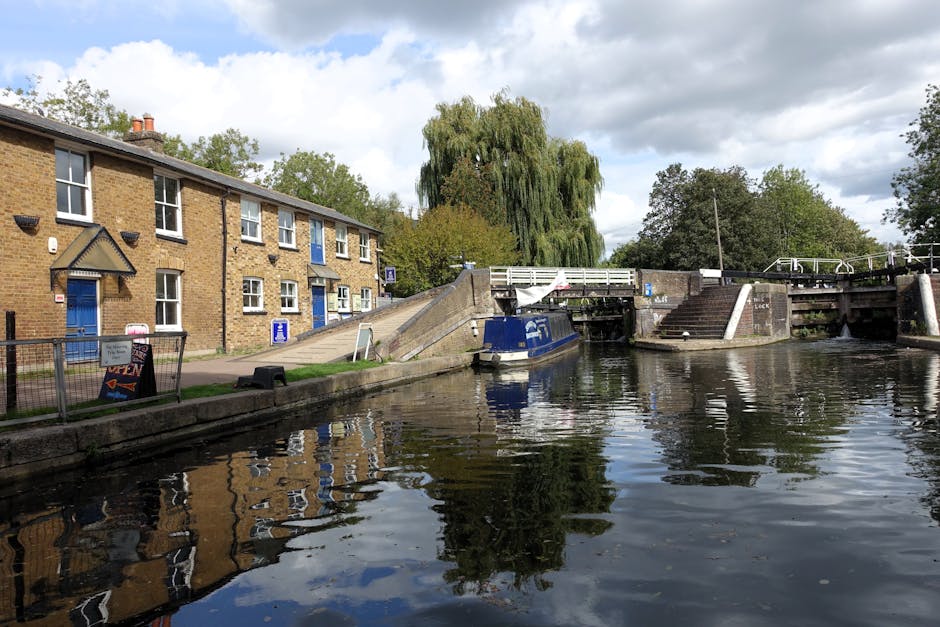
Teddington is a town in the London Borough of Richmond upon Thames, positioned on the north bank of the River Thames between Hampton Wick and Twickenham. Its riverside setting gives it a character shaped by water, transport and suburban development. The town is closely associated with Teddington Lock, which includes the first lock on the Thames upstream from London, as well as the adjoining footbridges and weirs that form an important crossing point and waterside landmark. The High Street provides the commercial spine of the town, while residential streets spread north towards Bushy Park and south towards the river. Bushy Park itself, one of London’s Royal Parks, is a major open space with historic tree avenues, deer habitat and formal landscapes. Teddington also has a notable scientific history: the National Physical Laboratory was established here in 1900, and the town later became known for the nearby film and television studios at Teddington Studios. Much of the built environment combines Victorian and Edwardian housing with later infill, creating a varied streetscape rather than a single uniform centre. Local churches, schools, libraries and smaller parade areas add to the town’s everyday life, while the river path and nearby open spaces make walking and cycling important parts of the area’s character. The result is a place that feels both settled and active, with a strong connection to the Thames corridor and the wider borough.
Hazardous, Bulky and Mixed Waste Considerations
Not every clearance can be treated as a straightforward mixed load. Some commercial waste is bulky, some is awkwardly shaped, and some requires a more cautious approach because of the material involved. Where a job includes items such as broken fittings, damaged stock or heavily soiled materials, it helps to identify them clearly before the collection. That allows the work to be assessed against the available handling and disposal options.
Hazardous waste is a separate matter and should be flagged early rather than left until the day of collection. If a premises has items that need special treatment, it is better to say so plainly and describe the material rather than the item name alone. That way the job can be considered on its own facts, and the collection plan can reflect the right level of care. For businesses with mixed loads, it may be possible to combine ordinary waste with other eligible categories, but only where the types are suitable to handle together.
When waste is mixed, the clearest arrangement is often to group similar items and keep anything sensitive, fragile or specialist separate. This is particularly useful on sites that have undergone refurbishment or clearance after a change of use. A good description at the start helps avoid confusion and makes the collection easier to organise. Hazardous waste disposal should be considered whenever the waste goes beyond routine commercial rubbish.
Book a Commercial Waste Collection

Whether you need a single clearance or a repeat arrangement, the easiest way to begin is with a short description of what needs removing. Include the main waste type, the approximate amount and any access points that matter, such as stairs, lifts, loading spaces or restricted hours. That gives enough detail to shape a practical collection and helps avoid unnecessary back-and-forth. If your premises contain a mix of items, list the main categories first so the most important work is clear.
It can also be helpful to think about the order in which the waste should leave the site. Some businesses prefer to clear the most visible areas first; others want the back rooms emptied before front-of-house spaces. Either approach is fine as long as the plan is stated clearly. If the collection involves office furniture, appliances or specialist items, mention those directly so the arrangement reflects the load rather than forcing everything into a generic description. Contact us for a quotation when you are ready to move forward.
We aim to make commercial waste removal in Teddington as straightforward as possible, from the first description of the job to the final loading of the waste. If you are comparing services, use the main waste type and the site conditions as your guide, then ask for a quotation once you have the basic details together. That is usually the fastest way to turn an unwanted pile of waste into a clear plan.